Linen · Making an irreversible money app feel safe
My role: Product design across research, UX/UI, and prototyping, from discovery to dev handoff.
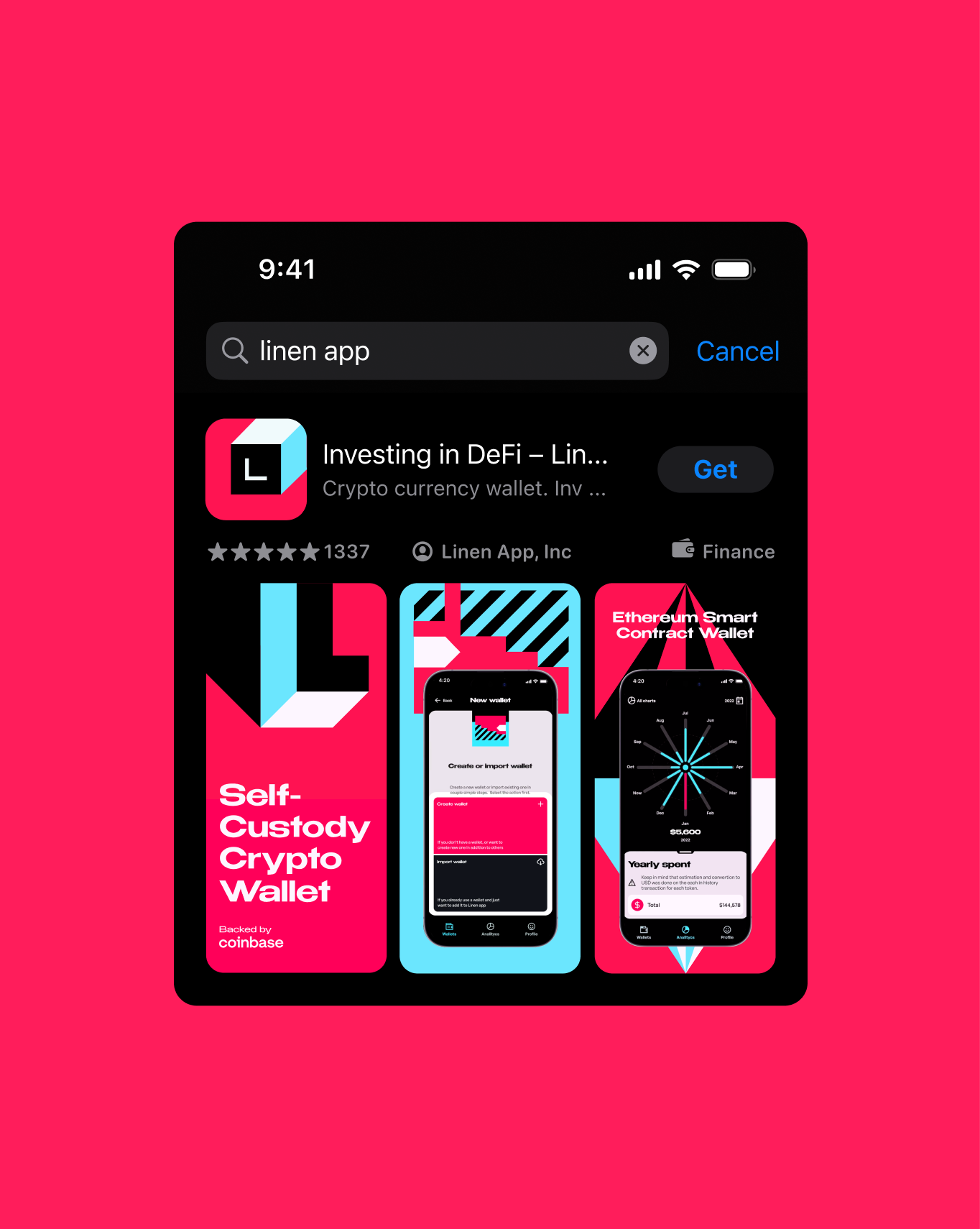
Linen is a self-custody crypto wallet for people who aren't crypto natives: creatives who want in without the fear that one wrong tap loses everything. The whole design problem was trust, turning an irreversible, high-stakes money system into something people feel safe enough to use.
Research
I started with the fear. In interviews, would-be users didn’t struggle with wanting crypto; they struggled with the vocabulary and the stakes. Seed phrases, gas, addresses that look like typos, transactions that can’t be undone: the mental-model mismatch was the product’s real risk, not the blockchain underneath it.
Two findings shaped everything. First, people needed to understand what an action would do before they committed to it. Second, reassuring copy didn’t build trust. The interface behaving the same way every single time did.
Designing the product
Plain language, not jargon
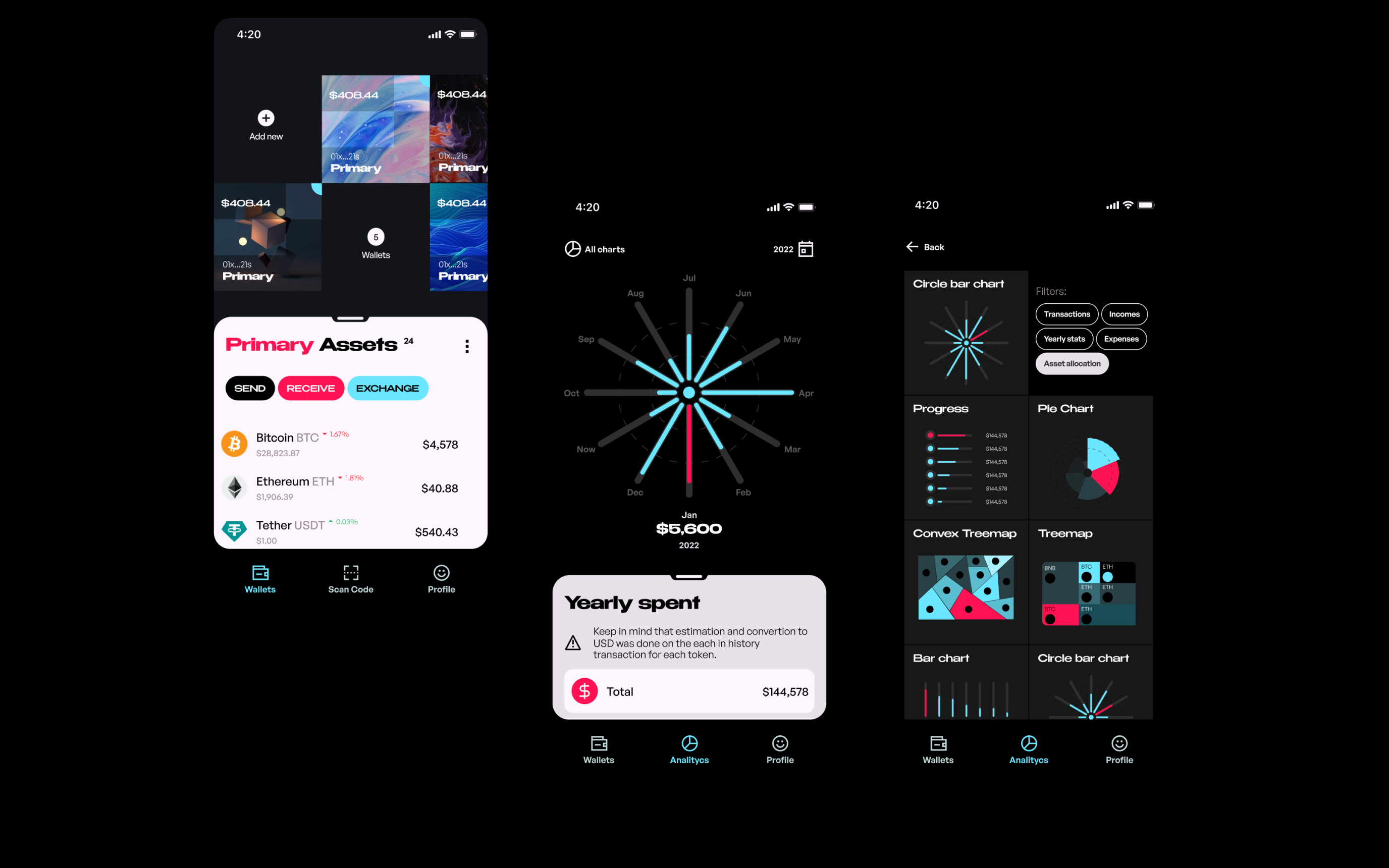
I rewrote the core flows around what you are trying to do, send, receive, back up, and pushed the crypto terminology to the edges, available but never blocking.
Confirmation as the spine
Every irreversible action gets a clear, calm moment that spells out exactly what will happen. I redesigned the send flow so the review step carries the weight, not a wall of warnings.
Feedback over faith
States stay explicit, pending, confirmed, failed, so the wallet always tells you where you stand instead of leaving you to refresh and hope.
Prototyped and tested
I prototyped the high-stakes flows and ran usability testing on them; the results drove the biggest changes to how confirmations and backups work.
Outcome
Usability testing turned the scariest step in the product, sending funds, into the one users trusted most. The wallet reads calm and legible, and for a self-custody money tool aimed at newcomers, moving people from fear to confidence was the whole job.